
A client pays. You see the alert. You feel good for about four seconds.
Then the scramble. Send the welcome message. Where is the intake form? Create her folder. Add her to the sheet. Share the booking link. Oh, and reply to the question she asked earlier.
Half of those will happen late. One might not happen at all. And she notices.
The first minute sets the tone
A new client has just trusted you with money. What happens next tells her whether she made the right choice.
A fast, clear start says you are organized. A slow, scattered one says you might be, but she cannot tell.
The domino effect
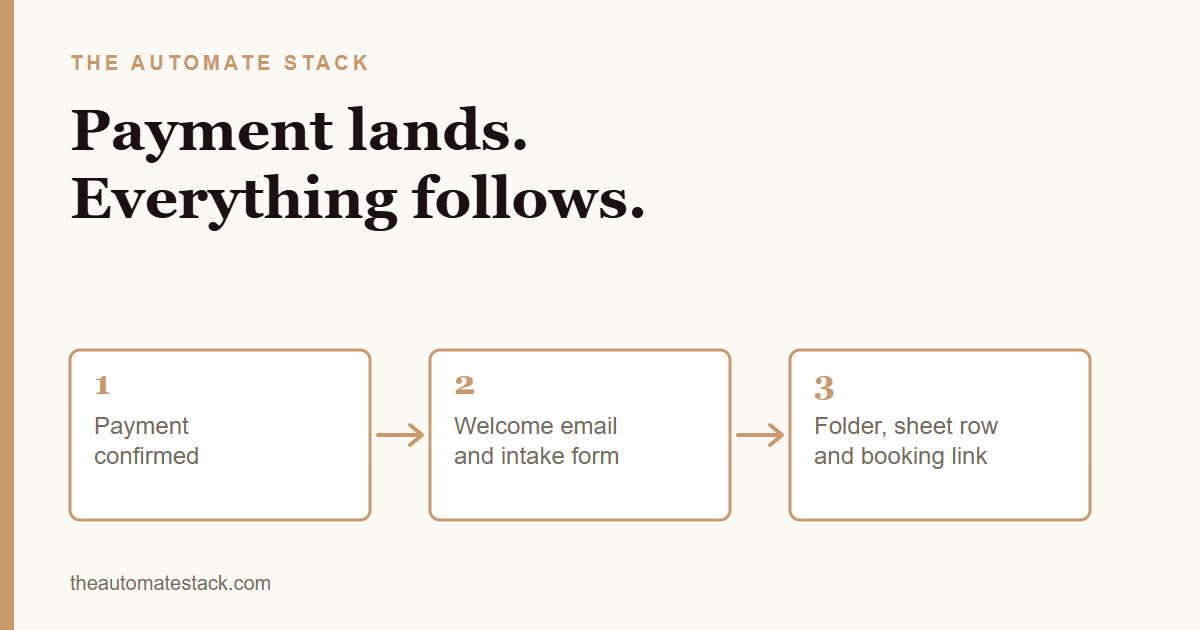
The idea is simple. Payment is the trigger. Everything else follows without you.
Say a coach gets a payment. Within a minute the client gets a welcome email with what happens next, the intake form, and a link to book her first session. In the background, a folder is created with her name and a new row appears in the client sheet.
You did nothing. It still looks like you were waiting for her.
Where you still step in
Personal touches stay personal. A voice note, a quick hello, an answer to a specific question. The chain handles the routine so you have time for those.
The steps
- List what you do after payment. Every step, even the small ones.
- Put them in order. What must come first.
- Pick the trigger. A payment notification from Paystack, Stripe or Selar.
- Build the chain. Make, Zapier or n8n runs the steps.
- Test with a small payment. Use a test mode or a friend.
- Add a failure alert. If a step breaks, you get a message.
Here is how I think about testing an automation before trusting it.
The best onboarding is the one the client never sees break.