
Chasing money is awkward because you are afraid of sounding desperate.
So you wait. A week passes. Then two. And when you finally send the message, it comes out either far too soft or far too sharp, because by then you are already annoyed.
The problem is not your tone. The problem is that you write the message in the moment, while you are in a mood. Write it once, in a calm hour, and the mood is gone.
Why it feels rude
Asking for money you are owed is not rude. The client agreed to pay. You are reminding them of a date.
What feels rude is the guessing. Do you mention the amount? Do you say sorry? Do you hint and hope they catch it? Most people end up apologising for the invoice, which is the wrong way round.
A good reminder does four things and nothing else:
- it names the invoice
- it states the amount and the date it was due
- it says how to pay
- it asks for one thing: payment by a certain day
That is the whole message.
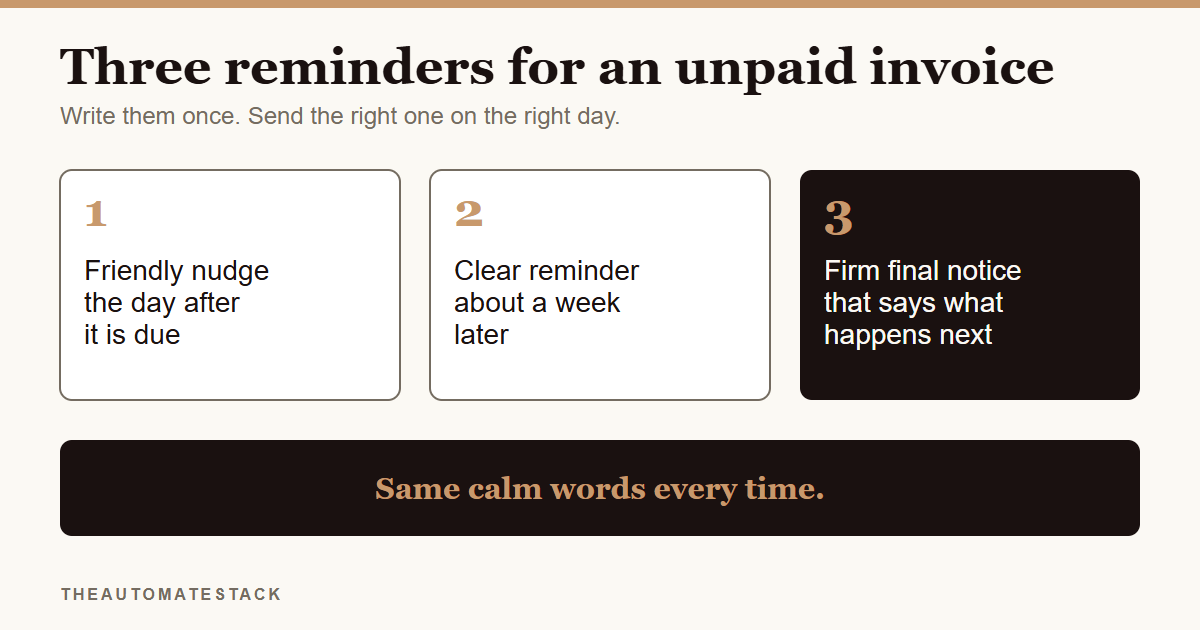
Write three reminders, not one
You do not need ten messages. Three is enough, and each has a different job.
- The friendly nudge. Sent the day after the due date. It assumes they forgot, and it makes that easy to say yes to.
- The clear reminder. Sent about a week later. Same facts, plainer tone, and a firm date.
- The firm final notice. Sent after that. It says what happens next, such as pausing the work until the invoice is settled, but only if that is really what you would do.
Say a client owes you ₦150,000 for a design job that was due on the 1st. The nudge goes out on the 2nd. Same invoice, same amount, calm words. If nothing comes, the clear reminder goes out around the 9th. You never had to decide how you felt about it.
Let AI draft them in your voice
This is where AI helps. Give it three things: a sample of how you normally write to clients, the facts of one invoice, and the job of each reminder. Ask for the three messages.
Then read them. Change anything that does not sound like you. Do not send a message you have not read. A reminder with the wrong amount in it is worse than a late one.
Use the client's first name and the invoice number. Leave out bank details and anything private.
Keep one simple list
The messages are the easy part. The hard part is knowing who is overdue.
Keep one list with five columns: client, invoice number, amount, due date and days late. Look at it once a week. Whoever is past due gets the next reminder in line.
The steps
- List every unpaid invoice. Client, amount and due date.
- Mark what is overdue today.
- Write your three reminders once. Or ask AI for a first draft in your voice.
- Read and edit them. Fix the amount, the date and the payment details.
- Send the right one on the right day. Nudge, then reminder, then final notice.
- Note the date you sent each one. So you never send the same message twice.
- Do it weekly. Pick a day and keep it.
A list of overdue invoices, with a polite reminder ready for each, is one of the setups in the Automate layer of the Starter Kit.
You are not chasing anyone. You are following a routine. That is a lot easier to do without feeling rude.